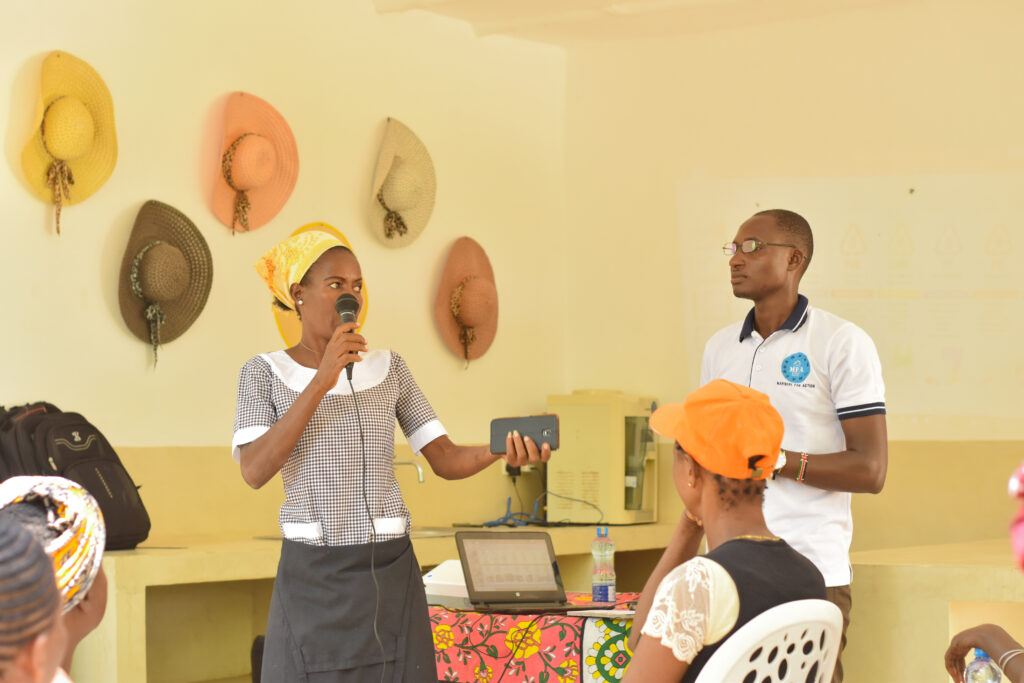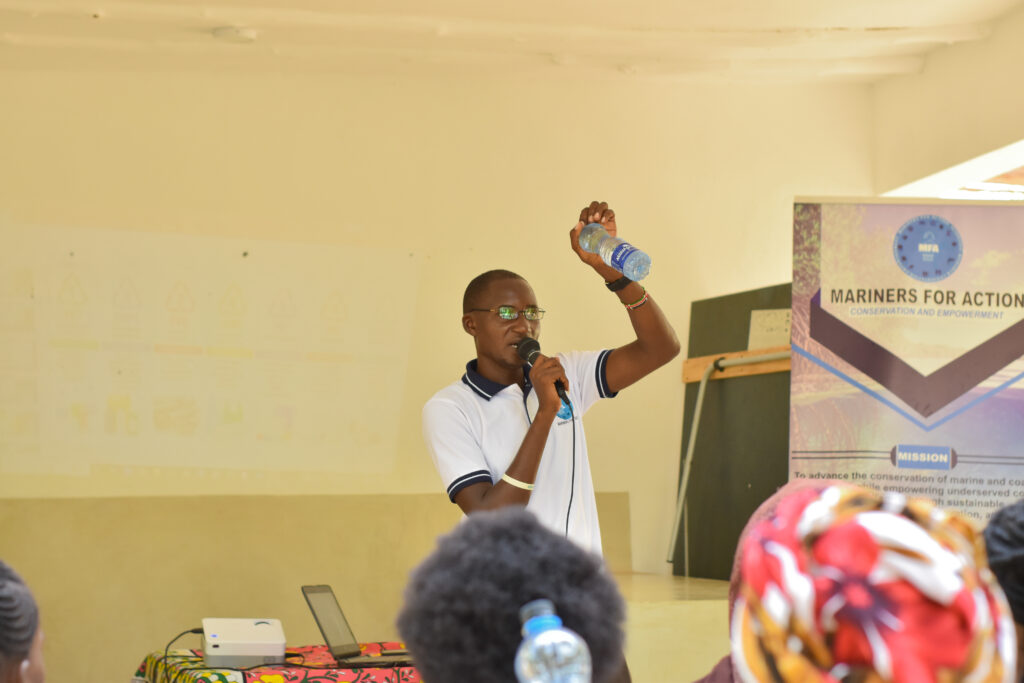

As part of our ongoing community training programme, we conducted a practical training session with the I LOVE MAMBRUI Conservation Group in Mambrui, focusing on plastic waste management, material recovery, and the environmental and socioeconomic implications of plastic pollution along Mambrui Beach.
The session provided practical and technical knowledge on plastic identification, classification and sorting, safe handling, aggregation, storage, and the pathways through which recovered plastic materials can be integrated into recycling and recovery systems.
Understanding the Environmental Impacts of Plastic Pollution
Plastic pollution is a persistent environmental challenge with implications for marine biodiversity, ecosystem integrity, human well-being, and livelihoods. Plastics entering the marine environment can remain in the environment for prolonged periods, undergo physical and chemical degradation, and progressively fragment into smaller particles, including microplastics.
The training examined the interaction between plastic pollution and marine fauna, with particular emphasis on sea turtles. Mambrui Beach is an important nesting area for sea turtles, making effective management of plastic waste particularly relevant to the protection of these species.
Marine turtles are highly vulnerable to plastic pollution through both ingestion and entanglement. Plastic bags, packaging materials, fishing-related debris, and other marine litter can be ingested when mistaken for prey or other food items. Ingestion can result in gastrointestinal obstruction, impaired nutrition, reduced feeding efficiency, internal injury, and, in severe cases, mortality. Entanglement in fishing gear and other persistent plastic materials can cause restricted movement, injury, drowning, and increased vulnerability to predation.
The accumulation and fragmentation of plastic waste can also affect important habitats around Mambrui Beach. Plastic debris can alter beach conditions, interfere with coastal habitats, and contribute to the degradation of ecosystems that support marine biodiversity. As larger plastic items fragment, microplastics can become widely distributed throughout the environment and may enter marine food webs.
These impacts also have implications for communities whose livelihoods and well-being are connected to healthy marine and coastal ecosystems. Poorly managed plastic waste can contribute to environmental degradation, blocked drainage systems, reduced sanitation, and potential exposure to harmful substances. The degradation of marine and beach environments can also affect fisheries, tourism, recreation, and other economic activities.
Plastic Identification, Sorting and Material Recovery
A central component of the training was the importance of accurate plastic identification and sorting within the waste management chain.
Plastic products consist of different polymer types with distinct physical and chemical characteristics, and their suitability for recycling varies accordingly. Effective sorting can reduce material contamination, improve the quality of recovered plastics, and facilitate more efficient downstream processing.
Proper handling and storage are equally important. Collected plastics require appropriate containment and storage conditions to prevent re-entry into the environment, contamination, and unnecessary material losses. Well-organised aggregation further supports efficient transportation and improves the connection between collection activities and recycling or material recovery facilities.
These processes form an important part of the broader plastic waste value chain, linking collection and recovery activities in Mambrui with downstream recycling, processing, and end-use applications.
Strengthening Plastic Waste Management
Effective management of plastic pollution requires an integrated approach that extends beyond periodic clean-up activities. It involves prevention, source separation, collection, sorting, aggregation, storage, transportation, recycling, responsible disposal, environmental monitoring, and continued stakeholder engagement.
The training therefore focused on strengthening practical understanding of plastic waste management as a system rather than as an isolated collection activity. Improved knowledge of material characteristics, appropriate handling procedures, and recovery pathways can contribute to more efficient resource recovery while reducing the quantity of plastic entering the marine environment.
Addressing plastic pollution at Mambrui Beach requires coordinated action across communities, waste management actors, recyclers, government institutions, conservation organisations, and other relevant stakeholders. Strengthening these linkages is essential for developing more effective and sustainable approaches to plastic waste management.
Plastic pollution may originate on land, but its consequences extend into connected marine ecosystems. Effective intervention therefore requires action across the entire waste management chain, supported by scientific knowledge, appropriate infrastructure, functional recovery systems, and sustained community participation.
Protecting Mambrui Beach and its marine ecosystems begins with preventing waste from entering the environment and ensuring that materials already in circulation are managed responsibly.