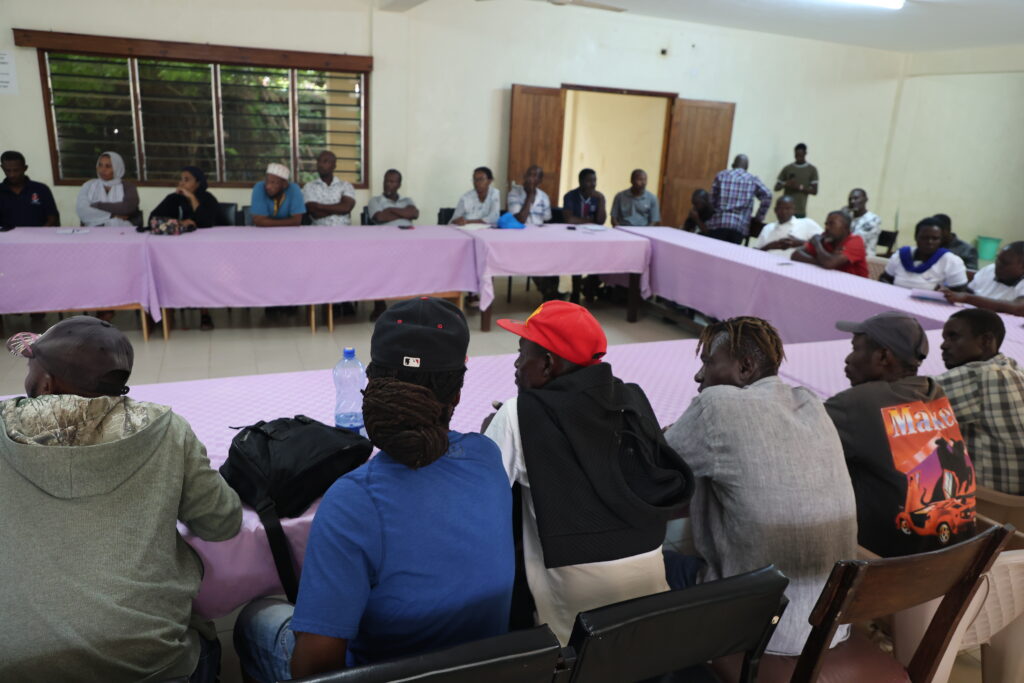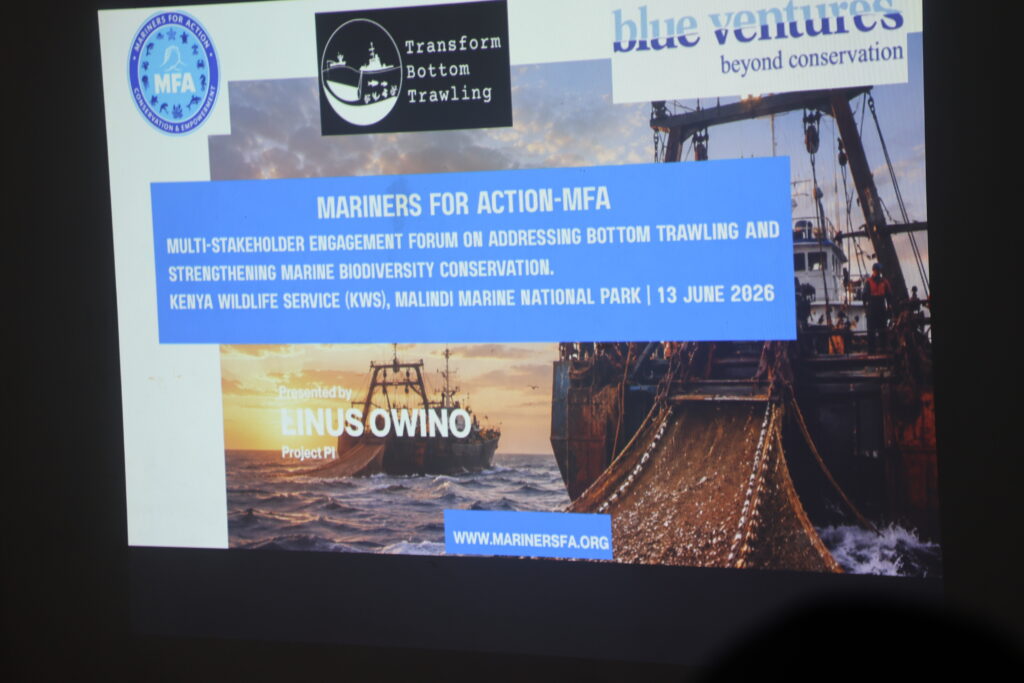

On Saturday, 13th June 2026, a stakeholder engagement workshop was held at Malindi Marine Park marking the official launch of an advocacy initiative on bottom trawling in Kenya’s coastal waters. The initiative advances structured dialogue and coordinated action on the ecological and socio-economic impacts of bottom trawling, with a focus on marine ecosystem integrity and the resilience of coastal livelihoods in Kenya and beyond.
The initiative is supported by Blue Ventures through the Transform Bottom Trawling Coalition, reinforcing a broader commitment to sustainable fisheries governance and the protection of small-scale fishing communities. The workshop brought together a diverse group of stakeholders, including representatives from seven Beach Management Units (BMUs) across Kilifi County, community-based organisations, the County Directorate of Fisheries, Kenya Wildlife Service Malindi station, and other partners engaged in marine conservation and sustainable fisheries management.
The engagement is designed to strengthen multi-stakeholder collaboration, enhance evidence generation on fisheries impacts, improve public participation in governance processes, and support the enforcement of existing regulations on bottom trawling. It also aims to reinforce community-based monitoring systems and contribute to the development of more adaptive and inclusive fisheries management frameworks.
A key outcome of the workshop was the rich and direct engagement with small-scale fishers and coastal community representatives. Participants raised significant concerns regarding the continued impacts associated with prawn bottom trawling, particularly the high levels of bycatch of non-target species, degradation of benthic habitats, increased competition for nearshore marine resources, and the cumulative pressures these factors place on local fisheries productivity and household livelihoods.
Community voices strongly highlighted persistent gaps in policy implementation and enforcement, calling attention to the need for stronger regulatory oversight and accountability mechanisms. There was a clear emphasis on either a complete prohibition of bottom trawling or substantial reforms to the existing Prawn Fishery Management Plan currently under review, with stakeholders underscoring the importance of aligning fisheries governance with ecological sustainability and the lived realities of small-scale fishers.